

Millimeter-accurate ground truth for humanoid robots
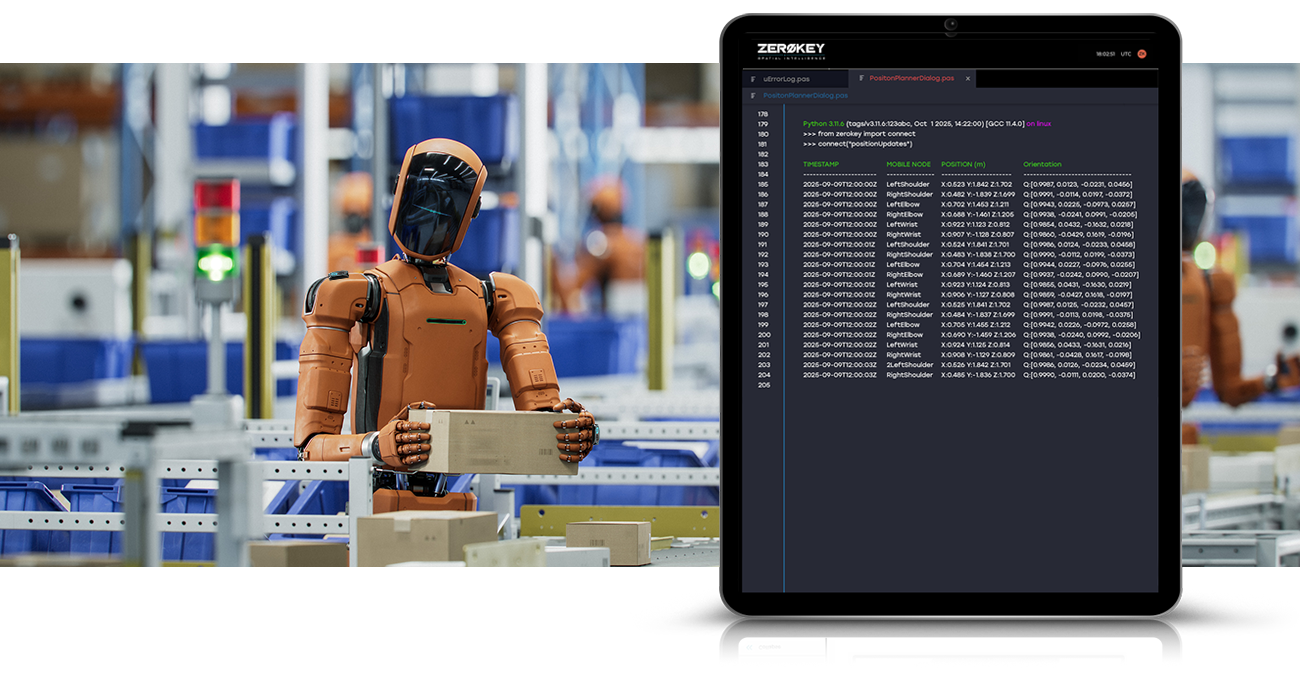
ZeroKey’s Quantum RTLS® gives humanoid robots a precise spatial foundation: 1.5 mm 3D tracking for robot location, limb motion, teleoperation, task training, and continuous correction of camera- and SLAM-based systems across real operating environments.
High-accuracy motion, position, and pose tracking
Humanoid robots need reliable spatial data when cameras drift, SLAM loses confidence, or environments get cluttered.
ZeroKey delivers high-accuracy position and pose data that keeps teleoperation sharper, training data cleaner, and robot behavior more consistent across real facilities, not just controlled lab settings.
High-accuracy motion, position, and pose tracking
Built for the full humanoid robotics stack
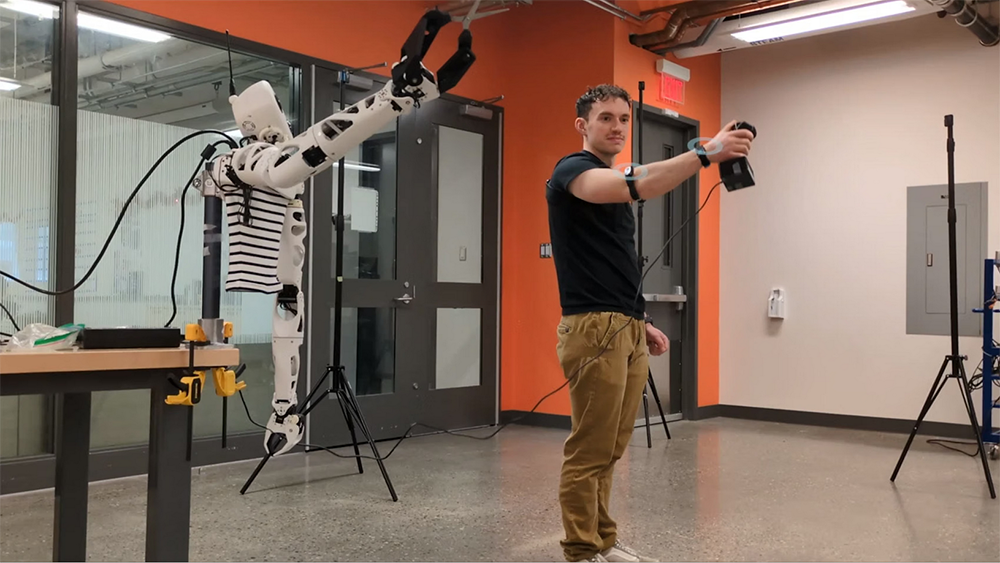
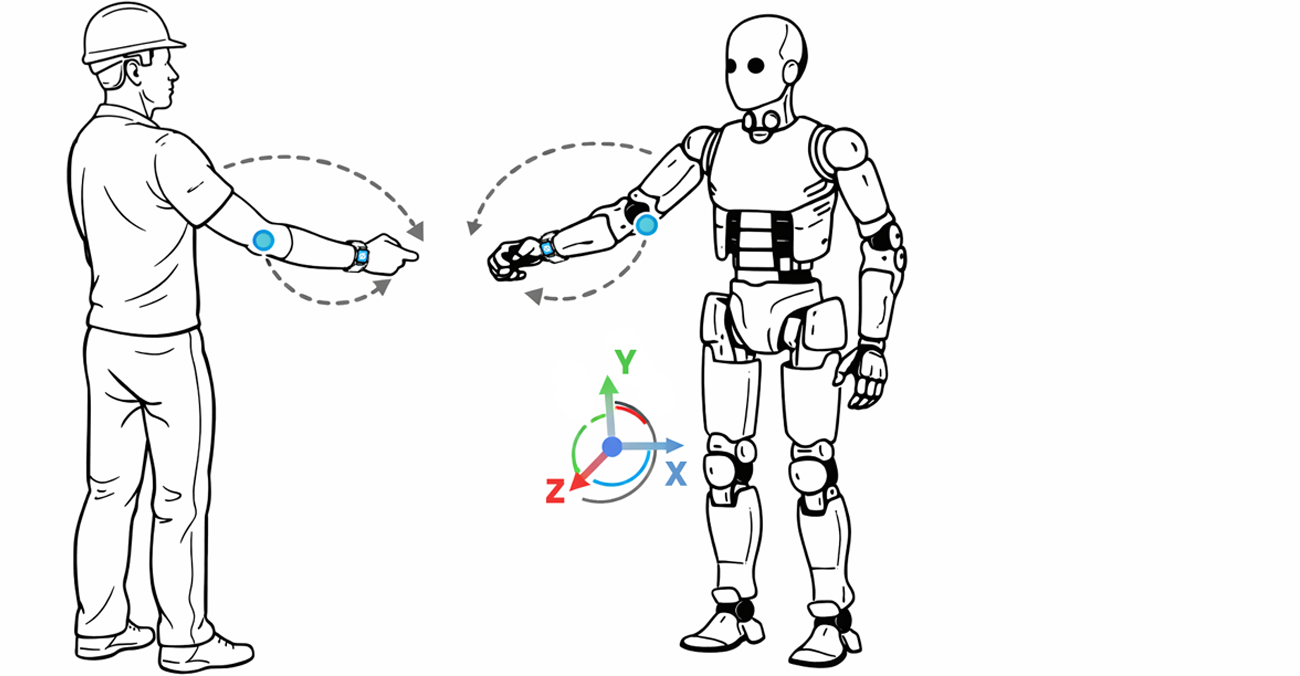
Teleoperation
Translate human motion into precise robotic control with stable, absolute motion data. Improve responsiveness, replay, supervision, and control in hazardous or remote environments.
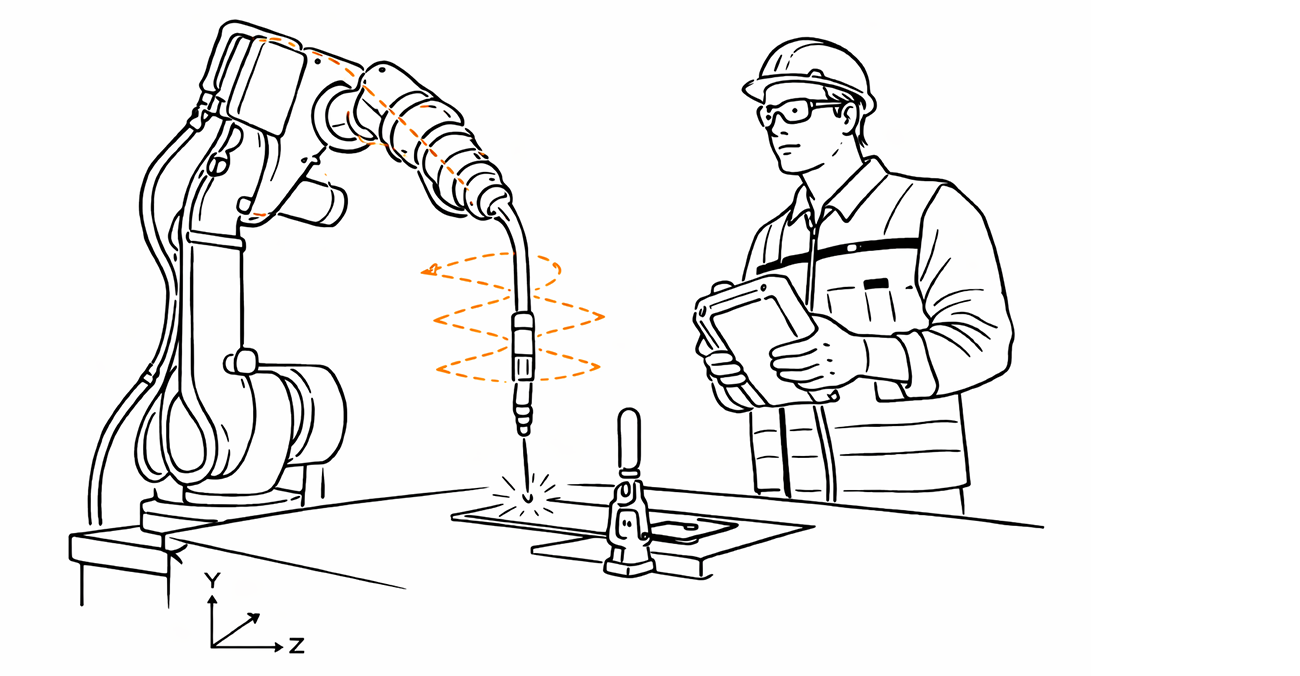
Task training
Capture clean, repeatable motion data for demonstrations, imitation learning, task segmentation, and behavior training. Track robots, operators, and tools in the same reference frame.
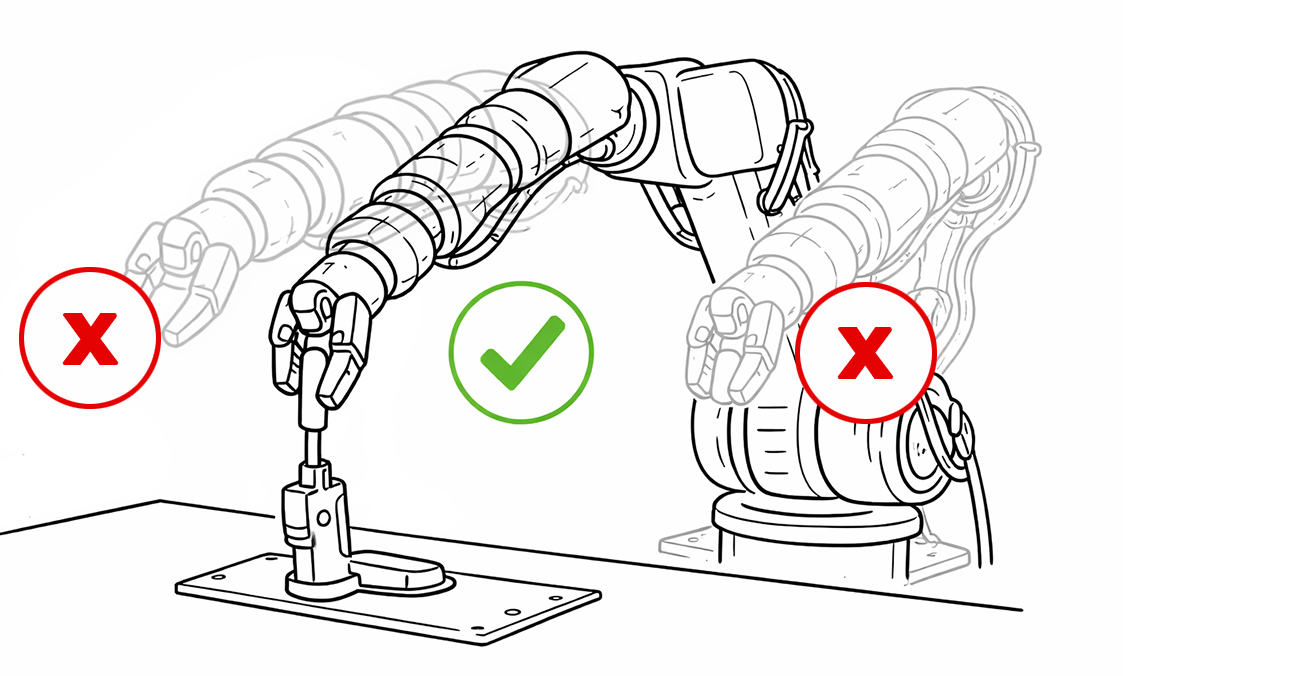
Calibration & correction
Calibrate robot systems, validate kinematics, align coordinate frames, and continuously correct drift in camera- and SLAM-based estimates.
Real-world ground truth
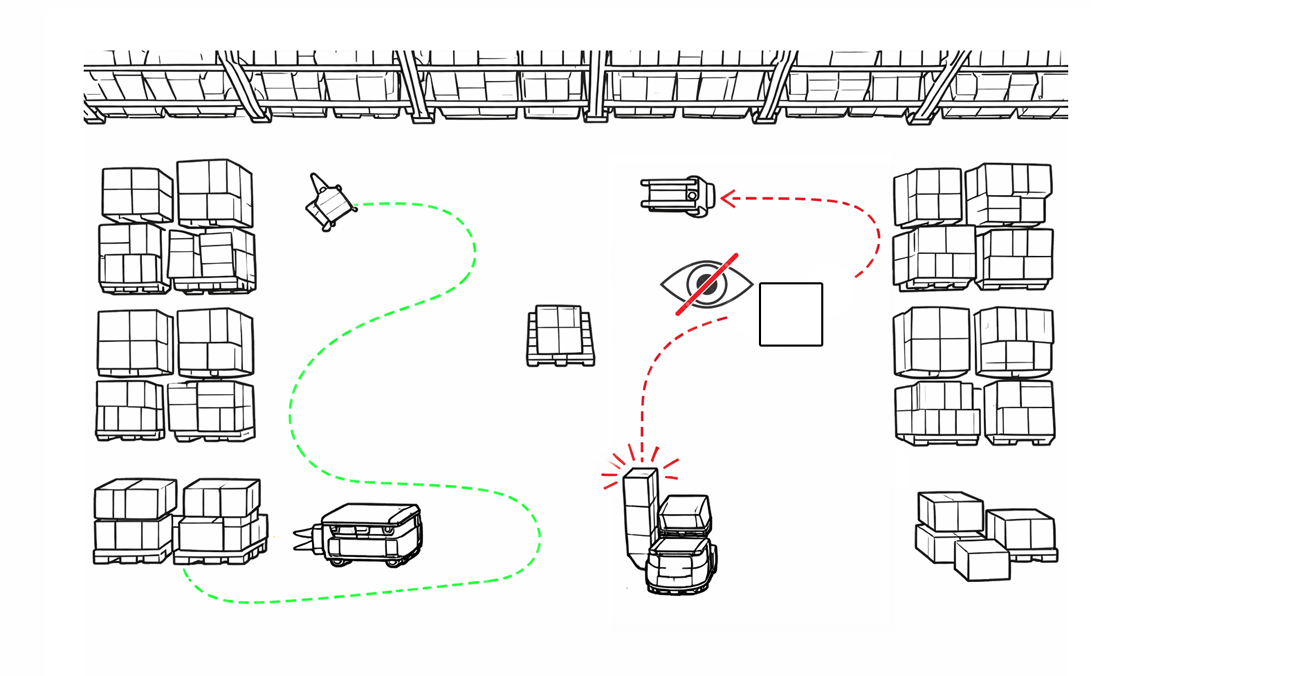
Give humanoid robots a persistent source of absolute position and pose when visual conditions degrade, feature points shift, or onboard estimates accumulate error.
Why ZeroKey
Why ZeroKey
Pair Quantum RTLS with OmniVisor AI™ to move from raw spatial data to actionable process intelligence. Query robot motion history, detect behavioral anomalies in real time, and monitor multi-robot environments from a single interface, powered by the same millimeter-accurate position data feeding your robotics stack.
Safer teleoperation
- Precise motion-to-robot mapping
- Stable operator state awareness
- Wide-area tracking beyond labs
- Reliable in messy environments
Better physical AI training
- One coordinate frame for people, robots, and tools
- Clean timestamped motion data at high frequency
- Higher-quality demonstrations and training sets
- Works in real environments, not just labs
Camera & SLAM augmentation
- Continuous absolute position reference
- Reduces accumulated drift
- Improves localization confidence
- Stabilizes robot state when vision degrades
Calibration & validation
- Compare estimated vs. measured motion
- Validate kinematics and alignment
- Track tool paths in real time
- Support continuous tuning
Cobot enablement
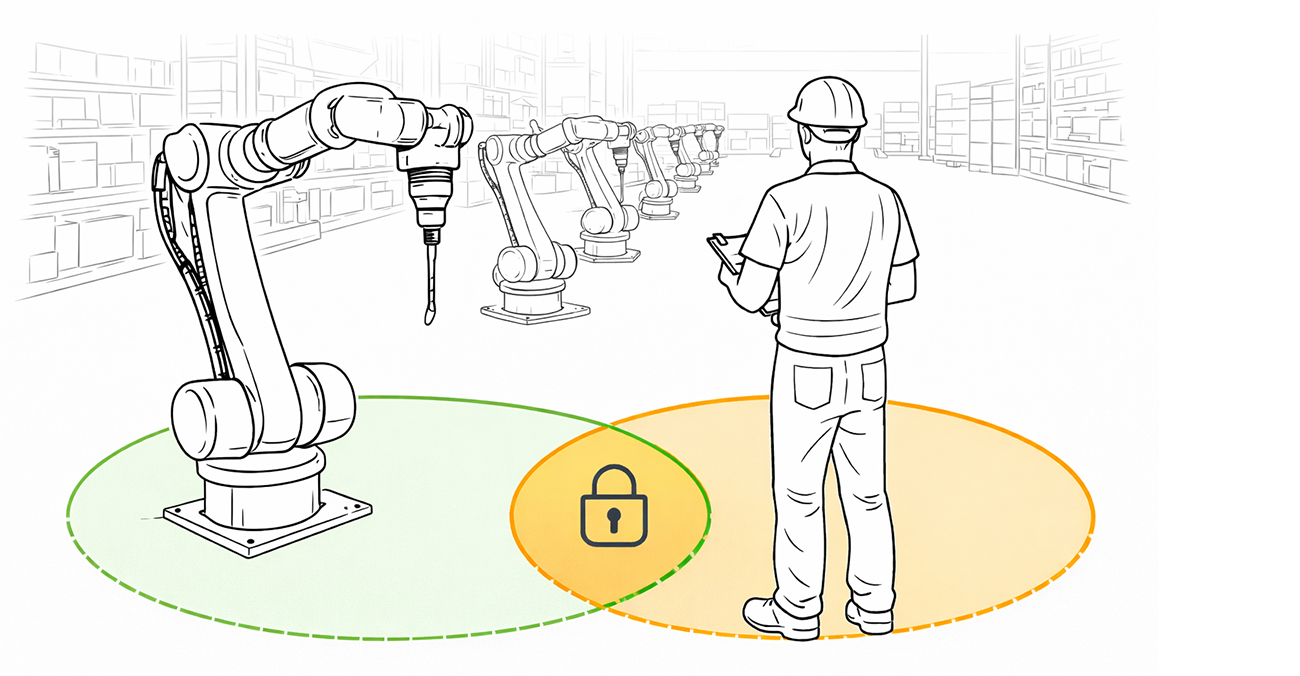
- Robots know where people are
- Safer shared workspaces
- Better human-robot handoffs
- Fewer manual safety workarounds
Direct API access
import requests
from signalrcore.hub_connection_builder import HubConnectionBuilder
TOKEN = "<YOUR_ACCESS_TOKEN>"
API = "https://<YOUR_DEPLOYMENT>.edge.zerokey.com/v3"
conn = requests.post(
f"{API}/events/connections",
headers={"Authorization": f"Bearer {TOKEN}"},
json={
"Mode": "read",
"Filters": [
{"FilterTemplate": "position_events"}
],
},
).json()
hub = HubConnectionBuilder().with_url(
conn["EndpointURI"],
options={"access_token_factory": lambda: conn["EndpointID"]},
).build()
hub.start()
Direct API access
ZeroKey’s open API makes it easy to stream raw events directly into robotic middleware, data pipelines, teleoperation software, or sensor-fusion stacks. Robots can consume raw position and quaternion pose directly from the mobile over USB-connected workflows or through the event stream, depending on the integration architecture.
Stream high-accuracy motion data into ROS2, teleop controllers, robotics logging pipelines, simulation environments, or perception-fusion stacks with minimal integration overhead.
Better than traditional mocap
Legacy challenges
Traditional motion capture systems rely on cameras and optical markers that often break down in industrial and field settings due to occlusion, lighting variability, limited range, specialist-heavy setup, and difficulty scaling across large areas.
ZeroKey’s solution
ZeroKey delivers industrial-grade motion tracking powered by millimeter-accurate RTLS. It scales across robots, operators, and equipment, deploys quickly without specialist crews, and provides the absolute spatial reference that robotics teams need for control, training, and validation in real-world environments.
Fast setup. Real data.
Fast setup.
Real data.
ZeroKey is designed for rapid deployment in robotics environments without specialist installation workflows. Set up measurement zones quickly, connect to the API, and start streaming usable position and pose data in under an hour.
• Rapid setup of measurement zones
• No specialist survey crew required
• Easy expansion across larger spaces
• Practical for labs, pilot lines, warehouses,
and field environments
• IP-rated hardware options available
Position payload
Timestamped, unique, robot-ready data
Each mobile outputs a unique identity, timestamped measurement data, 3D position, velocity, and quaternion rotation. That makes it easy to synchronize events, detect packet loss, and filter downstream data based on status and quality signals.
Position payload
{
"timestamp": "2025-07-07T15:40:18Z",
"type": "rf_cmd_update_position",
"node": "E0:05:6E:B9:C1:0A",
"seq": 9445,
"ins": 0,
"position": [-0.56744, -1.05965, 0.54268],
"velocity": [0.00121, 0.00031, 0.00040],
"rotation": [0.99999, 0.00040, -0.00143, -0.00470],
"flag": "00",
"pf": "03",
"ts": 427779518,
"toffset": 129440
}
Millimeter-accurate tracking in under an hour
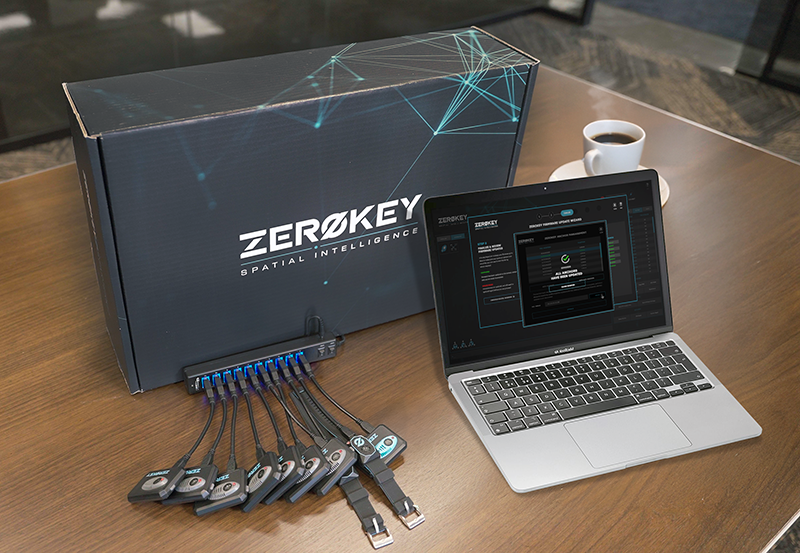
The Starter Kit is the fastest way to evaluate ZeroKey on a real humanoid robotics workflow. Stand up a real system, connect to the API, and start testing teleoperation, training, calibration, and correction workflows without a custom infrastructure project.
FAQs
FAQs
Quantum RTLS provides millimeter-accurate 3D position and pose data for robots, operators, tools, and test environments.
For humanoid robotics teams, it can act as a field-deployable ground truth layer for teleoperation, task training, motion analysis, kinematic validation, coordinate-frame alignment, and drift correction of camera-, SLAM-, or IMU-based systems.
Traditional mocap systems rely on cameras, IR markers, controlled lighting, clear line of sight, and careful studio-style setup. That works well in a lab, but it can become difficult in warehouses, factories, pilot lines, field environments, or cluttered test spaces.
Quantum RTLS is designed for industrial deployment. It uses Anchors and Mobiles instead of camera arrays, can cover larger operating areas, and is easier to move, expand, or reconfigure when test spaces change.
Quantum RTLS can provide timestamped position and pose data, including:
- Device ID
- Timestamp
- Sequence number
- 3D position
- Velocity
- Quaternion rotation
- Position flags
- Quality / derivation indicators
- Timing fields useful for synchronization and filtering
This makes it easier to consume the data in robotics middleware, logging pipelines, teleoperation software, simulation tools, and sensor-fusion stacks.
Yes. Depending on the integration architecture, position and pose can be accessed through the event stream from the Edge Compute Device (ECD) or directly from the Mobile over supported connected workflows.
That gives robotics teams flexibility: stream position data into a centralized system, pull data into a robot stack, or log Mobile-level data for testing and analysis.
Quantum RTLS exposes data through open APIs and real-time event streams. Robotics teams can stream position and quaternion pose data into ROS2, teleoperation controllers, data recorders, simulation environments, perception-fusion stacks, or custom applications.
A typical integration involves aligning the Quantum RTLS coordinate frame with the robot or test-space frame, subscribing to live position events, and filtering data based on flags, timestamps, and quality indicators.
Quantum RTLS supports position updates up to 20 Hz per device, depending on device type, configuration, tracking mode, coverage geometry, and system requirements.
For robotics use cases, the practical update rate should be evaluated together with latency, synchronization, robot speed, expected motion profile, and the downstream control or logging loop consuming the data.
A Starter Kit with rechargeable, wireless Anchors can be used to stand up a real measurement area quickly, often in under an hour for an initial evaluation space.
Because the system is built around deployable Anchors, Mobiles, and an Edge Compute Device (ECD), teams can create temporary positioning areas in labs, pilot lines, warehouses, test cells, or field environments without building a permanent mocap studio. Once the evaluation is complete, the same hardware becomes the first building block of a larger system.
Quantum RTLS includes configuration and calibration tools designed to help teams deploy, tune, and evaluate the system in real environments.
These tools support Anchor setup, Mobile configuration, calibration workflows, range visualization, device logs, and environment checks for possible sources of interference. For robotics teams working outside clean lab conditions, these tools are often important for improving position quality and understanding the operating environment.
Good calibration depends on collecting high-quality ranging data across the tracking volume. In practice, that means moving the Mobile through the area with clear ultrasonic line of sight to the Anchors, using an appropriate calibration path, and setting system parameters.
In complex spaces, teams may tune channel selection, Max Range, Anchor geometry, and calibration approach to improve stability and position accuracy.
For full-precision ultrasonic positioning, the Mobile needs to be within range and have a usable ultrasonic path to the Anchor network. Mounting, occlusion, Anchor geometry, reflections, and environmental layout can all affect performance.
Temporary obstructions can be bridged with built-in inertial propagation and sensor fusion, and position payload flags help downstream systems understand how a position was derived. For demanding robotics use cases, teams should validate update rate, latency, pose quality, and coverage in the actual test environment.
Want More Info?
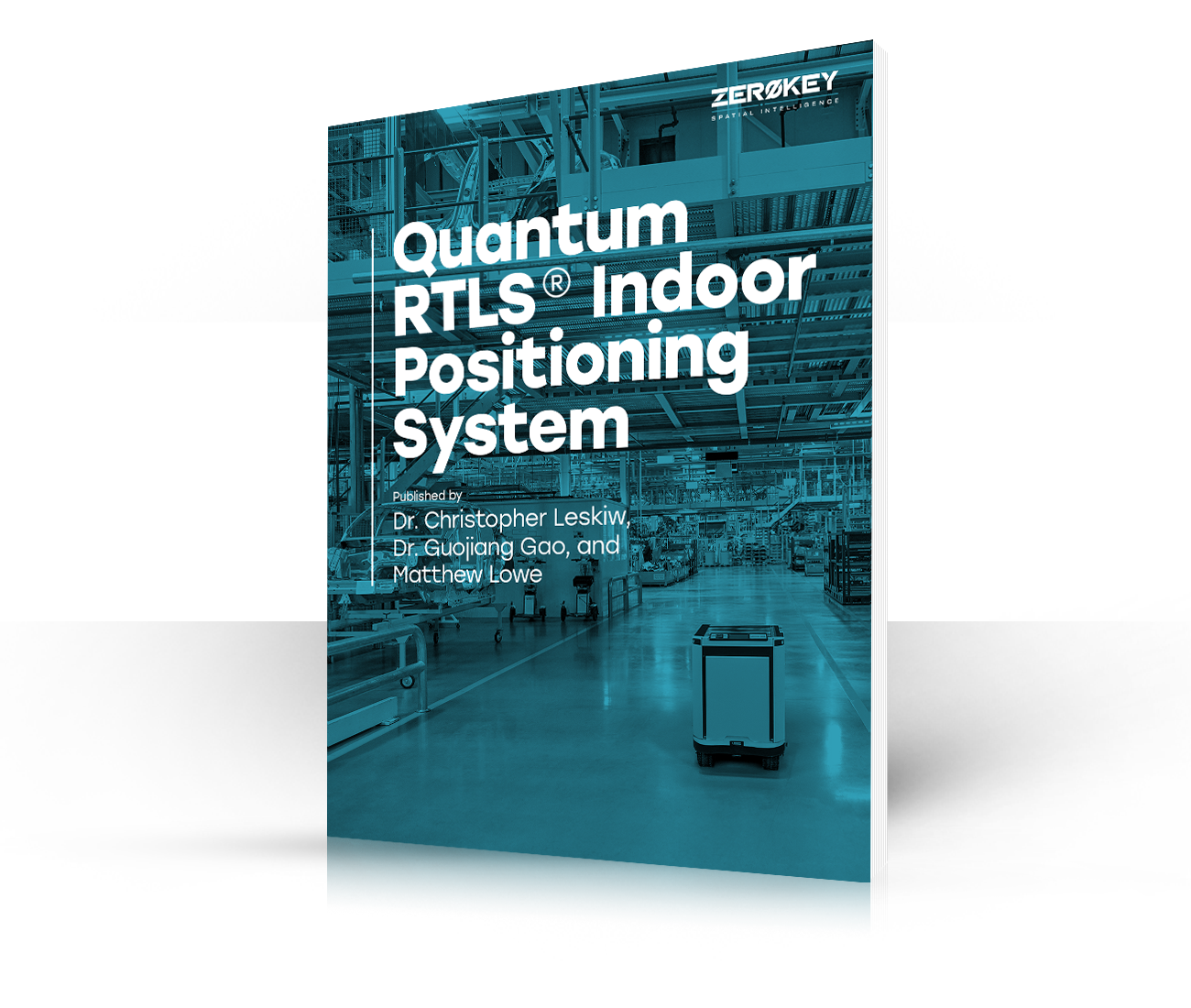
Download Our White Paper
ZeroKey’s Quantum RTLS technology is backed by more than thirty patents and extensive research and development! Want to learn why we’re the most accurate RTLS technology in the market? Read all about it in our white paper.
Want More Info?
Download Our White Paper
ZeroKey’s Quantum RTLS technology is backed by more than thirty patents and extensive research and development! Want to learn why we’re the most accurate RTLS technology in the market? Read all about it in our white paper.
CALGARY
HEAD OFFICE
3120 – 12 St. NE
Calgary, Alberta T2E 8T3
RESOURCES
SITE MAP
Products
Starter Kit
Start Kit Resources
Quantum RTLS
Spatial Intelligence Platform
Solutions
AGV Guidance & Navigation
Bolt Sequencing
Collision Avoidance
Humanoid Robots
Material Tracking
Operational Visibility
Smart Manufacturing
Time & Motion Study
Warehouse Intelligence
Worker Safety Solutions
Workflow Tracking
About
Our Company
Our Team
Careers
News
CALGARY
HEAD OFFICE
3120 – 12 St. NE
Calgary, Alberta T2E 8T3