Error-proof every fastening step with 1.5 mm
position validation
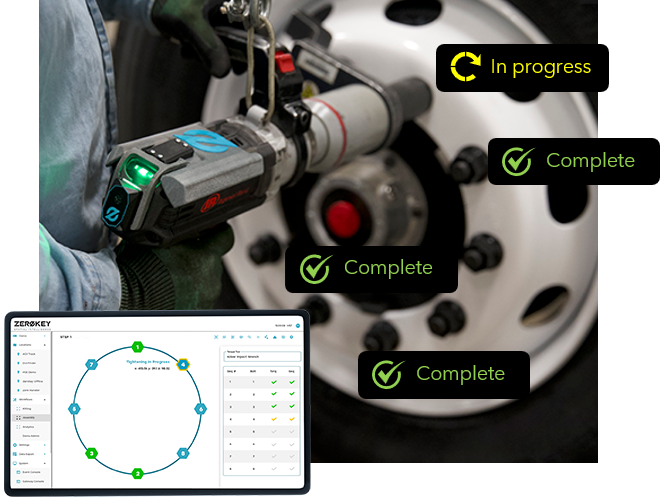
Eliminate missed or out-of-sequence tightening operations with millimeter-accurate real-time tool tracking. Quantum RTLS® integrates with smart tools to enforce correct torque order and location automatically, eliminating rework, downtime, and waste from the manual fastening process.
The problem
Tightening and fastening operations account for 40% of total defects in complex builds. Skipped or out-of-sequence tightening steps can lead to catastrophic in-the-field failures, especially for safety-critical assemblies.
The solution
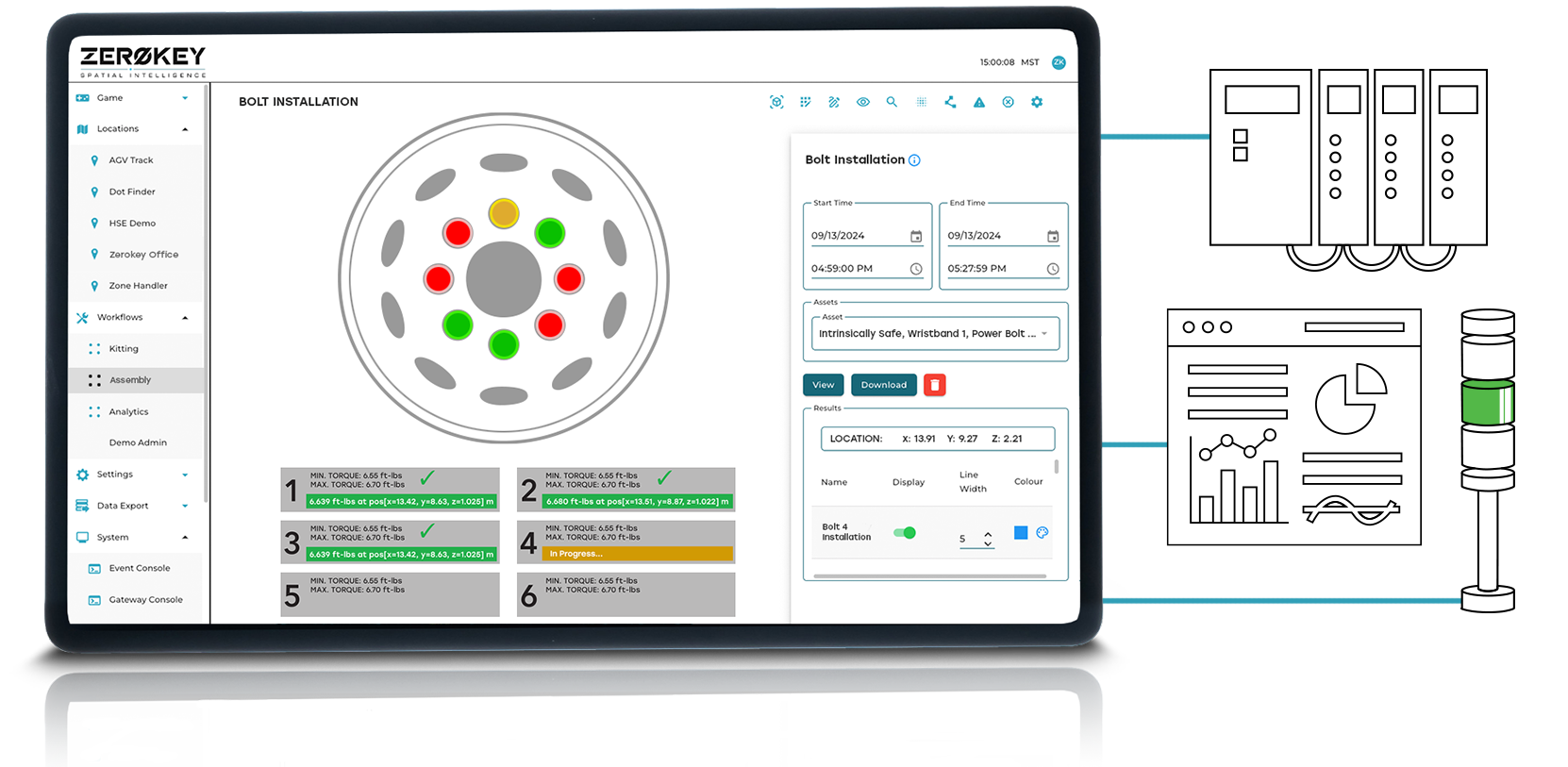
ZeroKey integrates hyper-accurate real-time location data with smart torque tools to enforce tightening locations and sequences, verify torque at every fastener, and ensure no steps are skipped. An optional tool lockout feature can also be enabled to eliminate assembly errors entirely.
Real-time
QA/QC
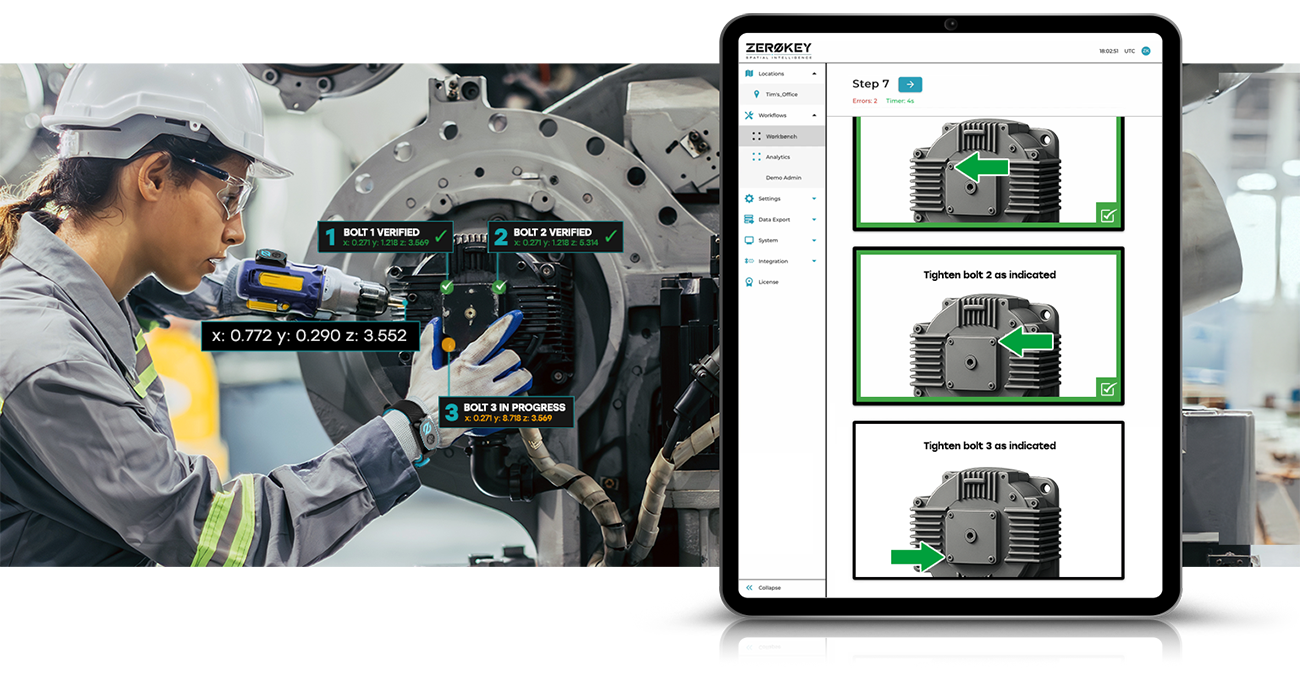
Ensure bolts are tightened in the correct order and with the right torque, every time. Automated sequencing and immediate operator feedback guarantee process compliance every time.
Integrates with
smart torque tools
Quantum RTLS integrates with smart torque controllers, including Torque Open Protocol tools such as Atlas Copco, Cleco, Ingersoll Rand, Stanley-Black & Decker, Desoutter, and Kolver. An optional tool lockout feature eliminates operator bypass and ensures strict compliance with procedures.
Jig-less bolt
sequencing
Verify torque order and completion without static fixtures. ZeroKey maps bolt geometry dynamically to ensure no fastener is missed, regardless of where work takes place.
Audit-ready
traceability
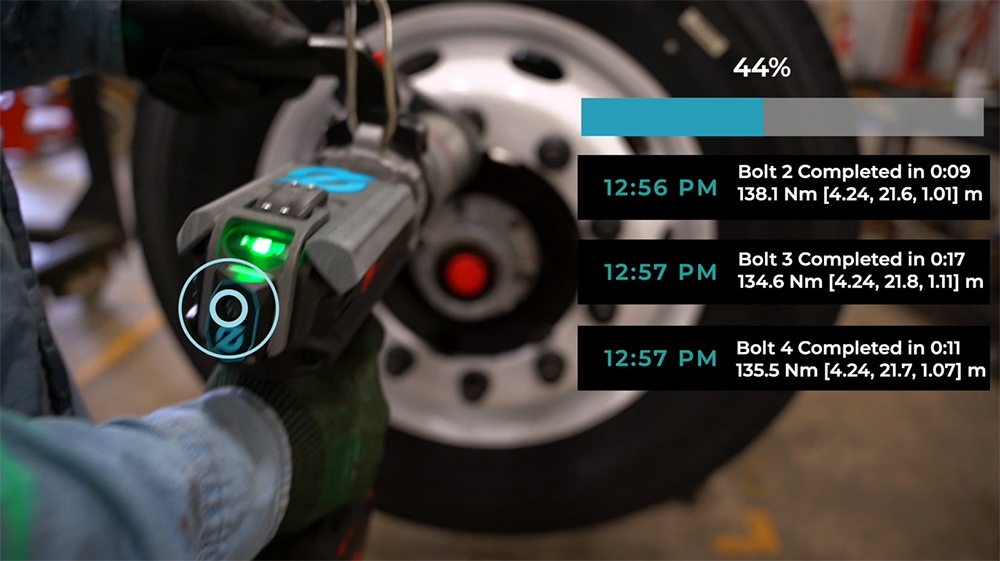
Every torque event and position is automatically logged with 3D location and torque data, creating a complete digital record for instant verification and compliance audits.
Real-time 3D sequencing for every bolt
ZeroKey captures every torque event with millimeter accuracy, providing a live digital record of each tightening operation.
Simplify industrial integration
fetch("https://yourdomain.edge.zerokey.com/v3/modules/historian/workflowCompletions", {
method: "POST",
headers: {
"Content-Type": "application/json",
"Authorization": "Bearer <YOUR_ACCESS_TOKEN>"
},
body: JSON.stringify({
"StartTime": "2025-07-01T08:00:00Z",
"EndTime": "2025-07-01T18:00:00Z",
"StepTypes": ["BoltSequence"],
"IncludeStepData": true
})
})
.then(res => res.json())
.then(data => console.log("TaskID:", data.TaskID));
{
"Timestamp": "2025-10-08T15:42:11Z",
"WorkflowID": "WF-TRK-042",
"StepType": "BoltSequencing",
"OperatorID": "E0:05:6E:B9:C1:0A",
"Status": "Completed",
"Bolts": [
{ "ID": 1, "TorqueNm": 320.4, "Status": "OK" },
{ "ID": 2, "TorqueNm": 322.1, "Status": "OK" },
{ "ID": 3, "TorqueNm": 319.7, "Status": "OK" },
{ "ID": 4, "TorqueNm": 318.9, "Status": "OK" }
],
"Summary": {
"CompletedBolts": 4,
"Missed": 0,
"OutOfOrder": 0,
"AvgTorqueNm": 320.7
}
}
import paho.mqtt.client as mqtt
import json
BROKER = "yourdomain.edge.zerokey.com"
TOPIC = "zerokey/tools/torqueEvents"
TOKEN = ""
def on_message(client, userdata, msg):
data = json.loads(msg.payload)
print(f"{data['Timestamp']} | {data['ToolID']} | {data['TorqueNm']} Nm | {data['Status']}")
client = mqtt.Client()
client.username_pw_set(username="token", password=TOKEN)
client.connect(BROKER, 1883, 60)
client.subscribe(TOPIC)
client.on_message = on_message
client.loop_forever()
Simplify industrial integration
ZeroKey’s open API and MQTT interfaces make it easy to integrate spatial and torque data directly into your systems. Automatically log torque events, trigger workflows, or stream clean JSON data to your data lake without any extra infrastructure.
TICO tractors digitized manual processes, slashing rework and inspection time by 60%
The challenge
The challenge
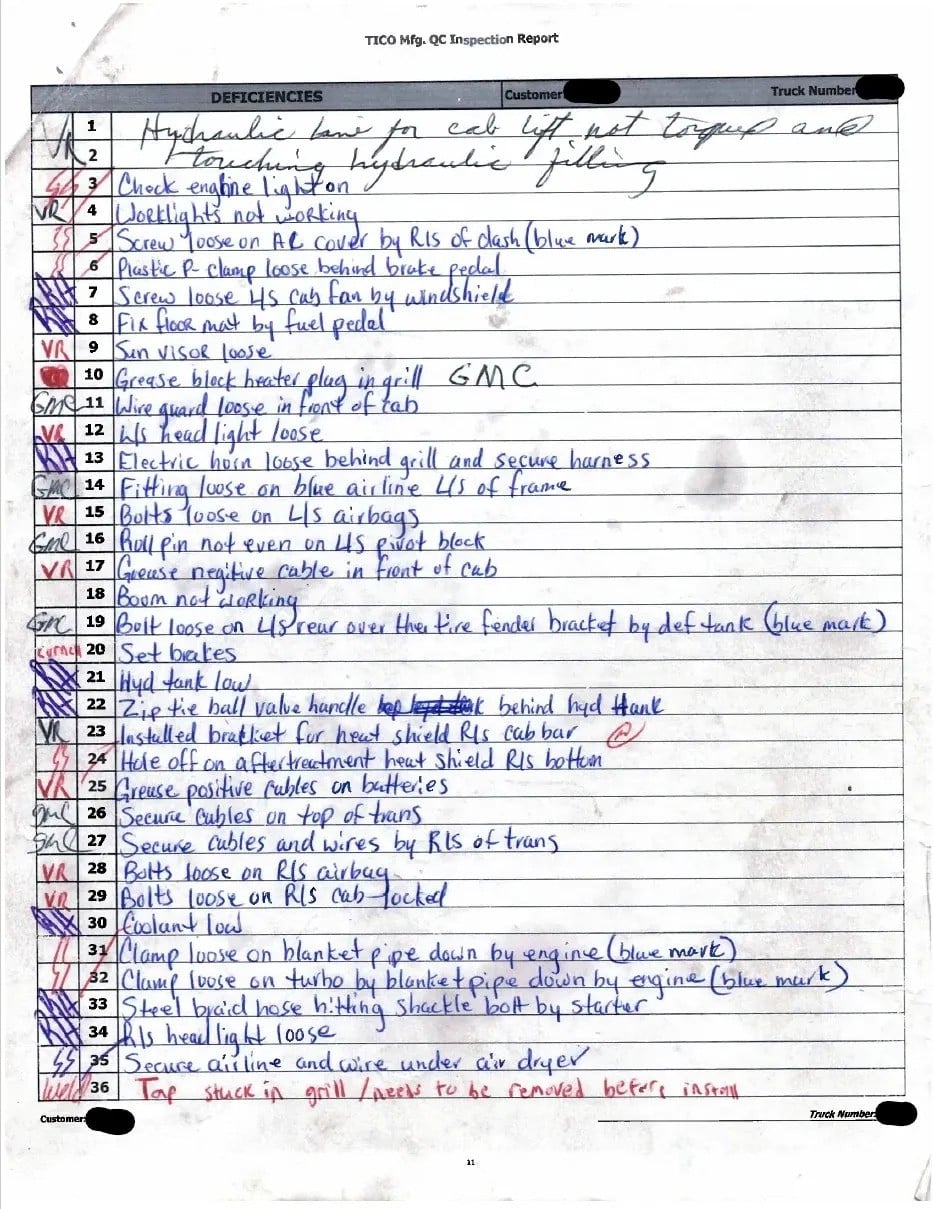
One of TICO’s critical quality concerns was bolt-tightening during manual assembly, so they introduced smart tools to track the torque applied to each fastener. However, the team at TICO quickly realized the system was unable to identify exactly which bolt an operator was tightening due to the lack of precise 3D positioning.
The solution
The solution
TICO deployed Quantum RTLS in assembly cells, with tags mounted on the tools. Real-time workflow tracking with 1.5 mm accuracy matches torque events to specific fasteners, creating a digital record of completion for every truck.
The impact
The impact
With Quantum RTLS, TICO achieved:
- • Exact Tool Positioning: Real-time spatial tracking at 1.5 mm accuracy pinpoints every torque event to it’s corresponding fastener.
- • Sequencing Verification: Each bolt is tightened in the correct order, with immediate alerts for skipped or repeated steps.
- • Torque Traceability: Integrated torque and position data create a complete digital record of every truck built.
- • Instant Feedback: Operators receive real-time guidance to correct errors without interrupting production.
By replacing reactive inspection with real-time verification, TICO shifted from quality control to full process assurance.
How it works: tool tip projection
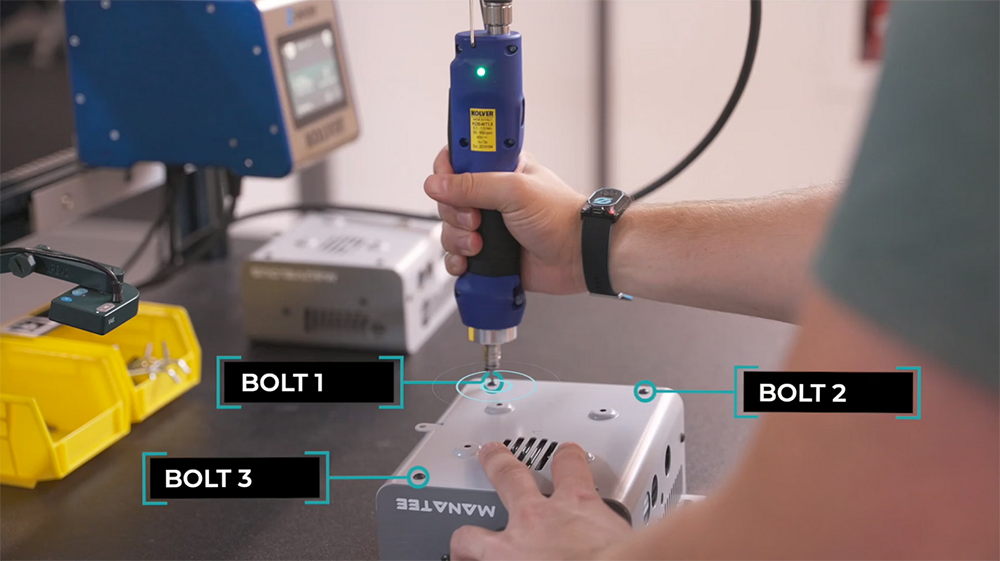
Quantum RTLS incorporates 6 degrees of freedom (6DoF) with 1.5 mm accurate real-time position to provide full spatial orientation of tools. This enables the system to project the exact contact point of the tool, capturing true interaction with each fastener.
Unlike vision systems that fail under obstruction, or other legacy RTLS limited to low-resolution 2D data, Quantum RLTS delivers robust, live positioning in any environment.
How it works: tool tip projection
FAQs
FAQs
Bolt sequencing with Quantum RTLS confirms that each fastener is tightened at the correct location, in the correct order, and with the correct torque result.
A Mobile mounts to the torque tool. Quantum RTLS tracks the tool in 3D and matches each torque event to the fastener location. The output is a record that shows which bolt was tightened, when it was tightened, and whether it passed.
Quantum RTLS tracks the tool position with up to 1.5 mm 3D accuracy. If the Mobile is mounted on the body of the tool, the system uses the known tool geometry to project from the Mobile to the bit or socket contact point.
That projected contact point is checked against the programmed bolt pattern, fastening zone, or work instruction step. If the tool is on the wrong bolt, the system knows before the step is accepted.
No. The bolt pattern is defined digitally, and Quantum RTLS checks the tool position in 3D space.
That means the setup can work at a fixed bench, in a flexible cell, on moving work-in-progress, or on a dynamic line. If the part or carrier is moving, it can be tracked too, so the bolt pattern moves with the assembly instead of being locked to a fixed station.
Yes. For moving work, Quantum RTLS needs a reference for where the part, carrier, fixture, or pallet is at that moment.
That reference can come from a Mobile on the carrier, a tracked fixture, a known station location, a PLC event, or another line signal. Once the part location is known, the fastening locations can be calculated relative to the moving assembly.
Quantum RTLS can integrate with smart torque controllers and fastening systems that expose torque results, PSETs, recipes, or control signals.
This includes tools using Torque Open Protocol and common controller ecosystems such as Atlas Copco, Cleco, Ingersoll Rand, Stanley Black & Decker, Desoutter, Kolver, ESTIC, and other compatible systems. The exact integration depends on what the controller supports and how the station needs to run.
Yes. The logic can work either direction.
Quantum RTLS can confirm the tool is at the right fastener and then enable the correct PSET, recipe, or unlock condition. The torque tool can also send a result back to Quantum RTLS to advance the sequence, mark the step complete, or trigger rework.
No. There are a few ways to implement it.
You can use ZeroKey Workflows to prove the station and run bolt sequencing directly. You can send the data to an MES or digital work instruction platform through the API. Or you can keep the shop-floor logic in a PLC and use Quantum RTLS as the position validation layer.
A common path is to prove the use case with ZeroKey Workflows, then put the production logic wherever it makes the most sense for the plant.
A typical record can include:
– Fastener ID
– Tool position
– Projected tool-tip location
– Sequence step
– Timestamp
– Torque result
– Angle or fastening result data, if available
– Operator, station, work order, or serial number
– Pass/fail status and exceptions
The result is a fastening record that proves not only that torque was applied, but that it was applied to the right fastener in the right sequence.
Most teams start with one station, one tool, and one bolt pattern.
The first step is to validate the basics: tool tracking, Mobile mounting, bolt mapping, sequence logic, torque controller communication, operator feedback, and traceability output. Once that station is proven, the same approach can be repeated across additional tools, stations, moving assemblies, or lines.
Vision systems can work when the camera has a clear view, but fastening is rarely that clean. Hands, tools, fixtures, glare, shadows, and part variation can all get in the way. Quantum RTLS tracks the tool in 3D, so it does not need to see the bolt.
Compared with fixed encoder-arm systems, Quantum RTLS is less restrictive for the operator and easier to apply to flexible stations or moving work. You get the same basic result of confirming the correct fastener location without tying the tool to a rigid mechanical arm.
It is also typically much lower cost to start and much easier to scale. Once the positioning infrastructure is in place, additional tools, stations, and workflows can be added without rebuilding a dedicated mechanical setup at every location.

Want More Info?
Download Our White Paper
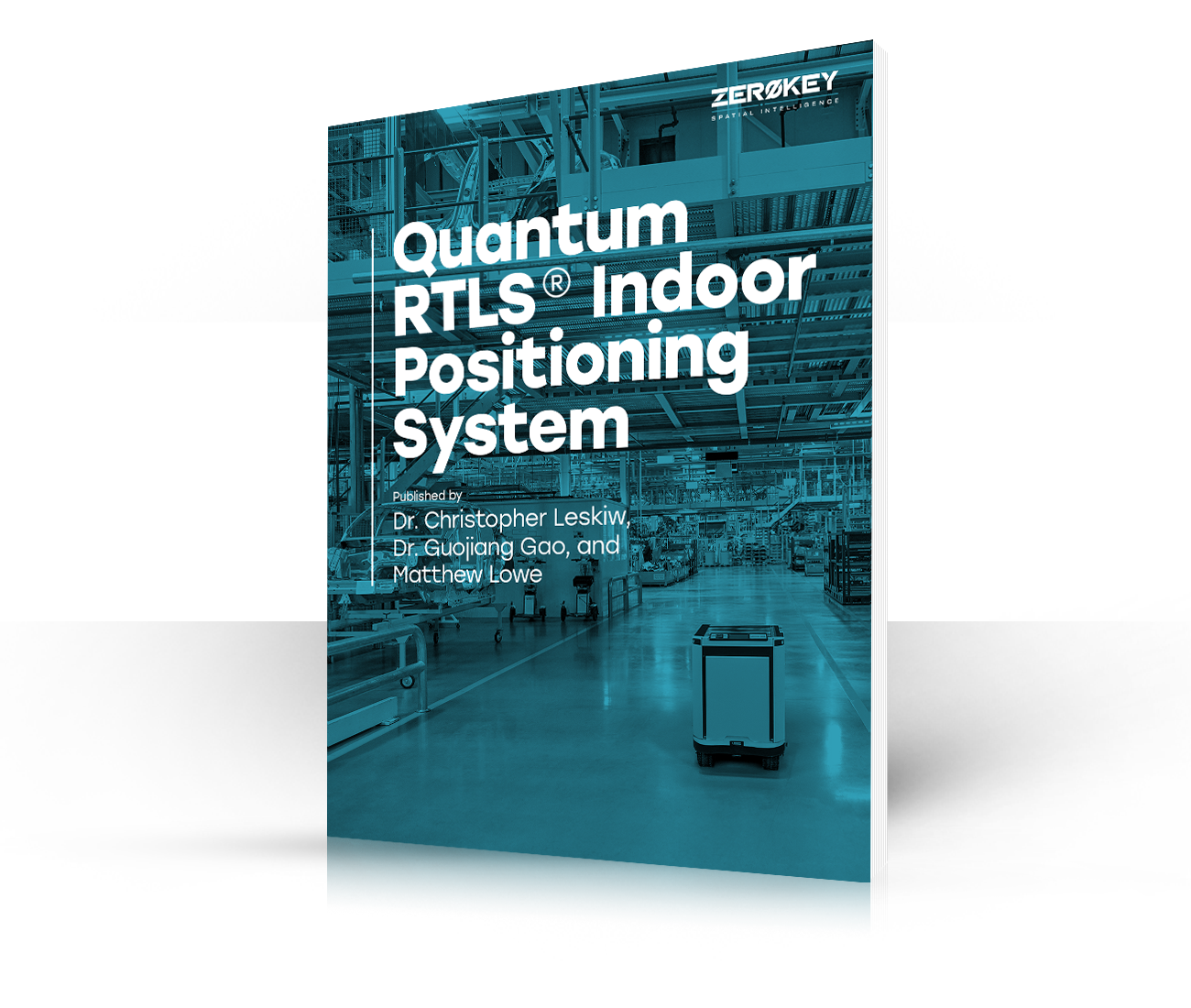
ZeroKey’s Quantum RTLS technology is backed by more than thirty patents and extensive research and development! Want to learn why we’re the most accurate RTLS technology in the market? Read all about it in our white paper.
Want More Info?
Download Our White Paper
ZeroKey’s Quantum RTLS technology is backed by more than thirty patents and extensive research and development! Want to learn why we’re the most accurate RTLS technology in the market? Read all about it in our white paper.
CALGARY
HEAD OFFICE
3120 – 12 St. NE
Calgary, Alberta T2E 8T3
RESOURCES
SITE MAP
Products
Starter Kit
Start Kit Resources
Quantum RTLS
Spatial Intelligence Platform
Solutions
AGV Guidance & Navigation
Bolt Sequencing
Collision Avoidance
Humanoid Robots
Material Tracking
Operational Visibility
Smart Manufacturing
Time & Motion Study
Warehouse Intelligence
Worker Safety Solutions
Workflow Tracking
About
Our Company
Our Team
Careers
News
CALGARY
HEAD OFFICE
3120 – 12 St. NE
Calgary, Alberta T2E 8T3