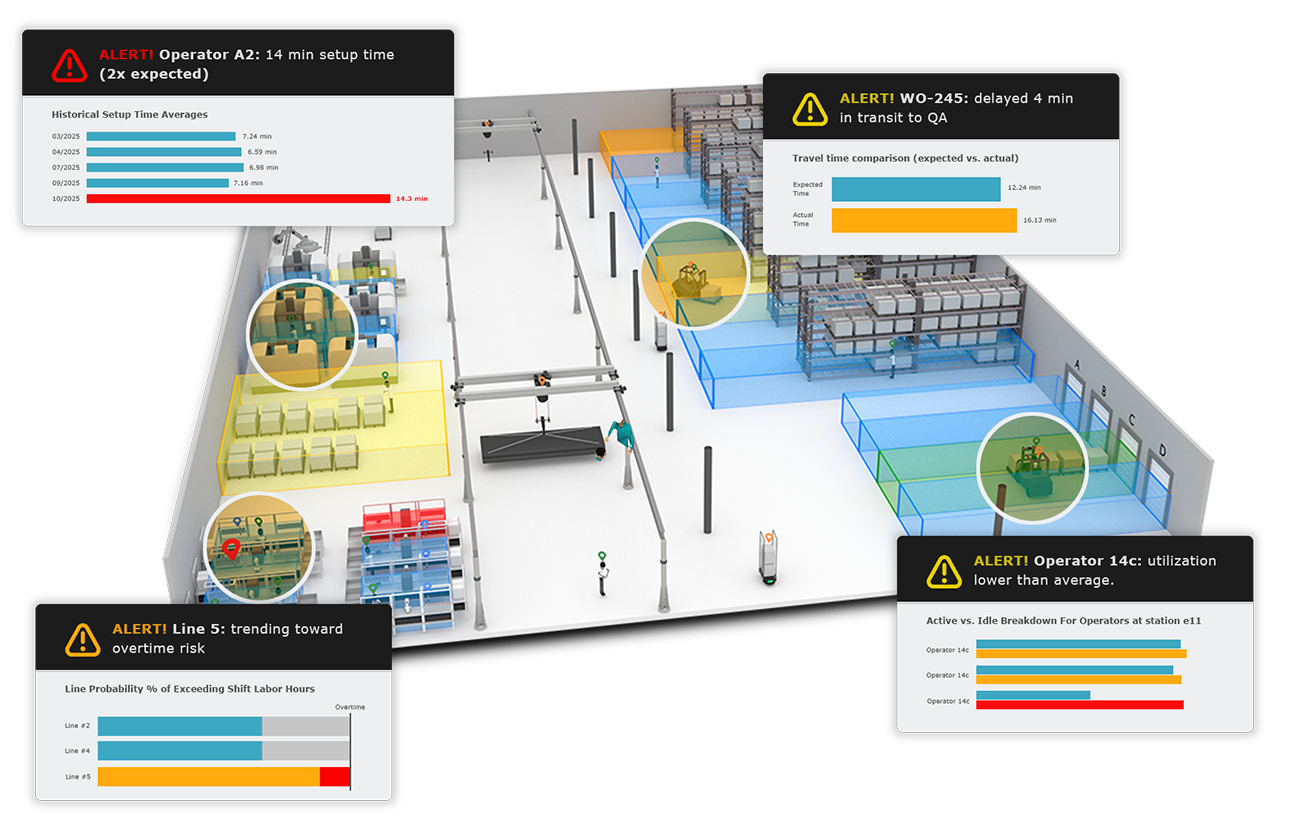
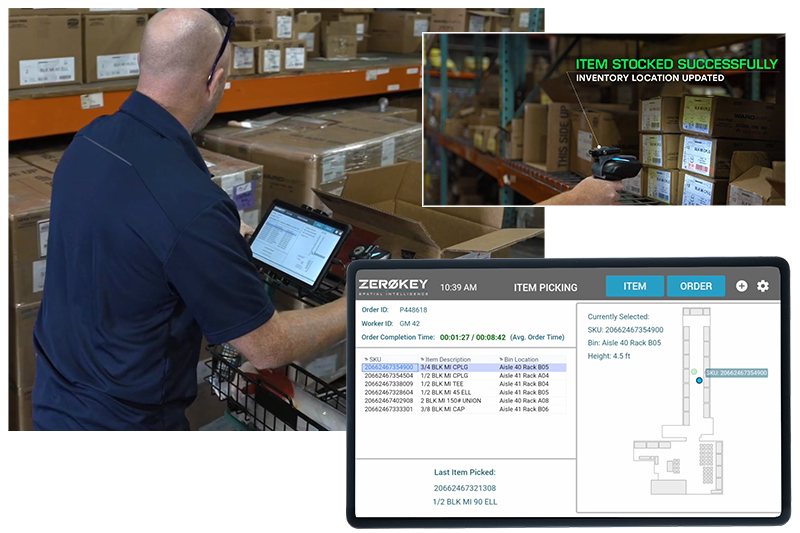
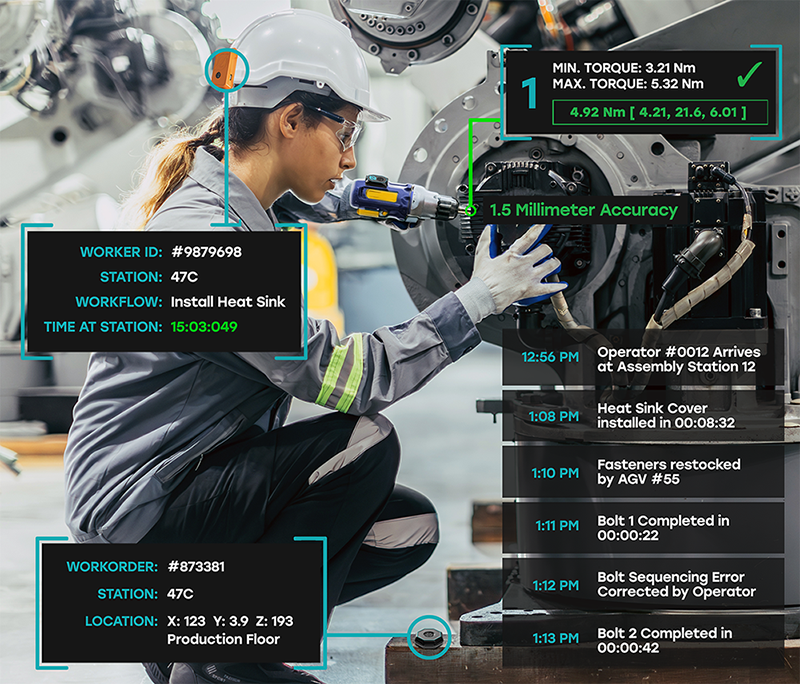
Only ZeroKey’s Quantum RTLS® + OmniVisor AI™ provide millimeter-accurate time and movement data, creating a single source of truth for workforce efficiency and process flow. Unlike manual logs or less precise systems, 1.5 mm spatial intelligence captures what no other technology can: every task, transition, and delay in real time.
Manual labor tracking is slow, error-prone, and incomplete. Stopwatches, PLC timers, and manual logs can’t capture the real complexity of human-driven processes.
Quantum RTLS® + OmniVisor AI™ automatically recognize every worker movement and task transition with millimeter accuracy, delivering precise, reliable, and actionable labor time data in real-time.
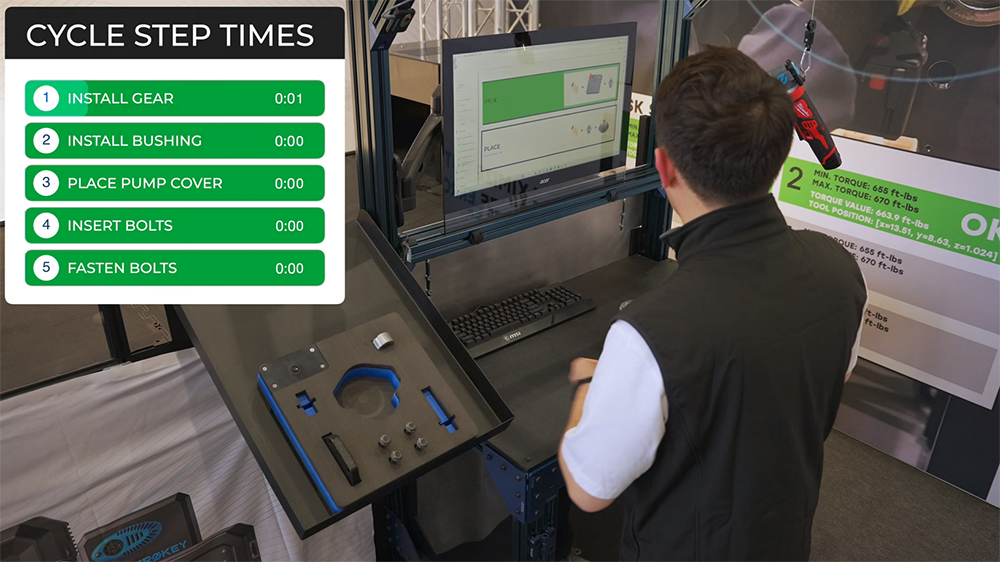
Track actual vs. expected cycle times automatically.
Up to 20% reduction in lost labor hours
Pinpoint delays at stations, tools, or material handoffs.
Identify issues 3x faster than manual audits
Replace manual logs with transparent, verified records.
95%+ accuracy in event recognition
Spot risks early and rebalance workflows proactively.
Reduce overtime by up to 15% per shift
ZeroKey automates time-and-motion capture with millimeter-accurate wearables that continuously log operator actions across every cycle. Instead of coarse “time at station,” you get step-level timestamps for assembly tasks, powering live cycle analytics while eliminating manual logging noise and other sources of variance.
OmniVisor AI™ + Quantum RTLS® capture labor activity in dynamic, real-world environments, not just linear production lines. In facilities where workers move between tasks and orders, every interaction is measured and contextualized, building a single source of truth for labor projections. From setup and transit times to actual work execution, every factor that impacts efficiency and profitability is visible in real time.
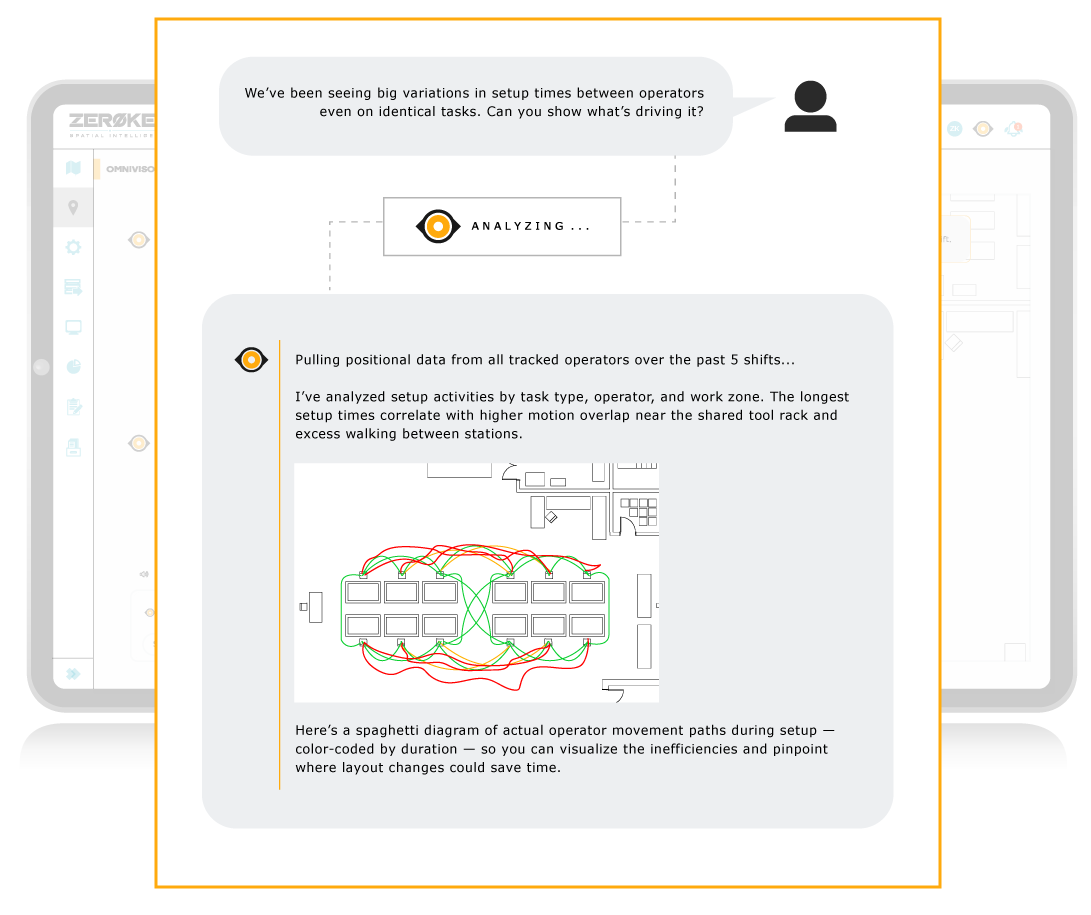
OmniVisor AI™ turns millimeter-accurate labor tracking into insights you can access instantly—just by asking.
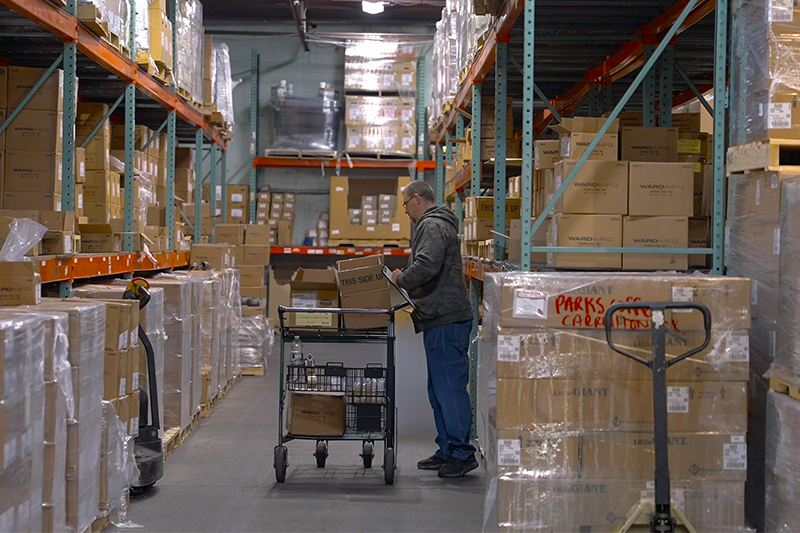
A global fulfillment provider struggled to understand true labor costs. Manual time studies and rough estimates left blind spots in how workers’ time was spent across picking, packing, and staging.
With Quantum RTLS, every task transition and worker interaction is recognized with millimeter accuracy. Instead of broad time buckets, the system captures the exact moment each discrete action occurs: picking a part, moving to the next station, or staging an order. This transforms raw movement into a precise, continuous record of labor time across every micro-step in fulfillment, giving the company a complete, real-time picture of how work truly happens.
By optimizing routes, rebalancing staff, and cutting unnecessary overtime, the company achieved 565% annual ROI without adding headcount or sacrificing throughput.
Faster Fulfillment
Rate
80%
Fewer Fulfillment Errors
6x
Faster New Hire Onboarding
$433,000+
Labour and Spoilage Cost Savings Annually
565%
ROI Annually
Other positioning systems lack the resolution required for reliable time and motion studies. Vision-based systems, for example, struggle with obstructions, changing light conditions, and privacy concerns. ZeroKey’s Quantum RTLS is the only positioning system on the market that delivers true millimeter accuracy at scale, providing complete facility-wide coverage so every movement is captured with unmatched precision and reliability.
A ZeroKey time and motion study uses Quantum RTLS to automatically measure how work moves through a process.
Instead of relying on stopwatches, manual observations, or self-reported time, the system captures real-time movement, location, and task context so teams can understand where time is spent, where delays occur, and how work compares to the standard.
Traditional time studies capture a small sample of observed work. ZeroKey can capture continuous time and movement data across real production conditions.
That means lean teams can move from “what did we see during the study?” to “what happens every shift, every cycle, and every day?” It also reduces observer bias and gives teams a more reliable baseline for kaizen, labor planning, and standard work improvement.
ZeroKey can support simple workstation studies, complex human-driven workflows, mobile work, and non-linear processes.
Examples include:
This flexibility matters when the work does not happen neatly at one bench or follow a fixed sequence.
No. ZeroKey can be useful whether the process is paper-based, Excel-based, manually observed, partially digital, or already connected to MES / ERP systems.
Teams can start by measuring movement and proximity, then add zones, workflows, operator prompts, integrations, or OmniVisor AI as the project matures.
Tasks can be identified in several ways depending on the process.
For structured work, tasks can be tied to workstation zones, digital work instructions, step triggers, tool use, or system events. For less structured work, tasks can be inferred from location, movement, dwell time, proximity to a product or asset, and other context.
For example, in a cement manufacturing process, worker proximity to a specific cast can be used to automatically bin time against that cast, without requiring the worker to manually log each activity.

Yes. This is one of the strongest use cases for Quantum RTLS.
Many high-value time and motion problems involve workers moving between stations, materials, vehicles, parts, tools, and equipment. Because Quantum RTLS tracks position in 3D, studies can be built around movement paths, zones, proximity, dwell time, and interactions.
OmniVisor AI™ turns the movement data from Quantum RTLS into operational insights that are easier to use.
Teams can automate reporting and ask questions such as where time is being lost, which steps are varying by shift, why a process is missing takt, or which areas have the most waiting or rework. OmniVisor AI can help surface bottlenecks, explain variance, and recommend actions without forcing teams to manually dig through raw data.
Personnel tracking can be configured to support process improvement without becoming individual surveillance.
Data can be aggregated, anonymized, grouped by role, shift, workstation, process step, or area, and used for kaizen, staffing models, standard work, and process design. Tracking also only occurs inside the Quantum RTLS system coverage area, and sensitive areas such as bathrooms, locker rooms, or break areas are completely excluded from coverage and reporting.
Most teams start with one process, station, cell, route, or work area where there is a clear operational question.
Examples include: Why is cycle time varying? Where is labor being lost? How much time is spent searching or walking? Where do handoffs stall? How much time is spent at each cast, order, cart, or work zone?
A Starter Kit can be used to validate the first study area, collect baseline data, and prove whether the method captures the process accurately enough to scale.
ZeroKey’s Quantum RTLS technology is backed by more than thirty patents and extensive research and development! Want to learn why we’re the most accurate RTLS technology in the market? Read all about it in our white paper.
3120 – 12 St. NE
Calgary, Alberta T2E 8T3
Products
Starter Kit
Start Kit Resources
Quantum RTLS
Spatial Intelligence Platform
Solutions
AGV Guidance & Navigation
Bolt Sequencing
Collision Avoidance
Humanoid Robots
Material Tracking
Operational Visibility
Smart Manufacturing
Time & Motion Study
Warehouse Intelligence
Worker Safety Solutions
Workflow Tracking
About
Our Company
Our Team
Careers
News
3120 – 12 St. NE
Calgary, Alberta T2E 8T3